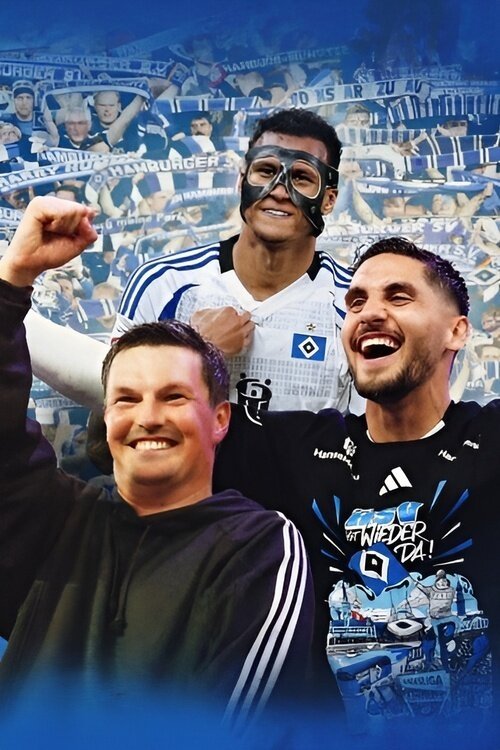
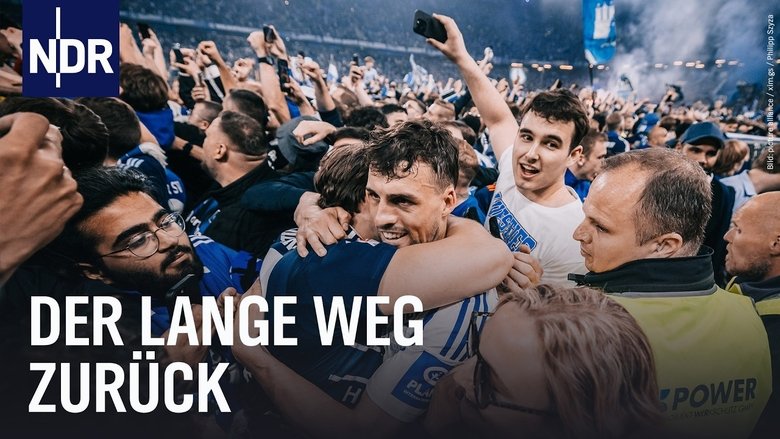
The HSV is back! - The long-awaited return to the Bundesliga
⭐ 0.02025-05-2430 minReleased
Revenue
Not Disclosed
Budget
Not Disclosed
Where to Watch
Stream in high quality
In Theaters / VOD
Global Revenue
Not Disclosed
Detailed Plot
The 1989–90 season was tumultuous for BFC Dynamo. The East German regime faltered and parts of the Berlin Wall were opened on 9 November 1989. Forward Andreas Thom became the first player in the DDR-Oberliga to leave for the West German Bundesliga. The dismantling of the champion team from the 1980s was now well underway. The Stasi was dissolved and the club thus lost a major sponsor. The East German Ministry of the Interior declared that it was only prepared to support the club until the end of the 1989–90 season. The club changed its name to FC Berlin on 19 February 1990, in an attempt to distance the club from the Stasi. The number of spectators dropped drastically. FC Berlin finished the 1989-90 DDR-Oberliga in fourth place and failed for the first time to qualify for a European competition. Also Thomas Doll, Frank Rohde and Rainer Ernst left for the Bundesliga after the season.
FC Berlin got off to a poor start in the 1990-91 NOFV-Oberliga, and Jürgen Bogs returned as coach. FC Berlin fans created one of the biggest hooligan scenes in East Germany, and an 18-year-old supporter, Mike Polley, was shot dead by police during riots in Leutzsch in connection with a match against FC Sachsen Leipzig on 3 November 1990. The team finished the 1990-91 NOFV-Oberliga in 11th place, but qualified for the play-off for the 2. Bundesliga. FC Berlin narrowly missed promotion to the 2. Bundesliga. A large number of players left the club after the season, including Heiko Bonan, Burkhard Reich, Waldemar Ksienzyk, and Hendrik Herzog. FC Berlin participated for the first time in the DFB-Pokal in the 1991-92 season. The team dominated the 1991-92 NOFV-Oberliga, but would once again fail to qualify for the 2. Bundesliga. More players left the team, including Christian Backs and Jörn Lenz. FC Berlin would lose two complete teams during the first one or two years after the fall of the Berlin Wall.
FC Berlin had to continue at the amateur level. The competitors in the league now consisted of teams such as Tennis Borussia Berlin, Eisenhüttenstädter FC Stahl, and BSV Stahl Brandenburg. FC Berlin had to rely on its youth department to supply the team with new players. The club qualified for the 1994–95 Regionalliga Nordost. The re-instated Regionalliga now constituted the new third level. The Regionalliga Nordost meant new meetings with well known opponents such as 1. FC Union Berlin and FC Carl Zeiss Jena. FC Berlin struggled in the Regionalliga Nordost, but managed to retain its place in the league. The 1995–96 Regionalliga Nordost would also mean meetings with the old rival 1. FC Dynamo Dresden. Werner Voigt became the new coach at the end of autumn 1995. He had a long history with BFC Dynamo.
The millions the club had earned on player transfers in the early 1990s had been used up by the mid-1990s. Club President Volkmar Wanski had to support the club with annual personal contributions. The successes in the Regionalliga Nordost did not materialize, and Voigt and FC Ber
Production Stills & Gallery
View HD