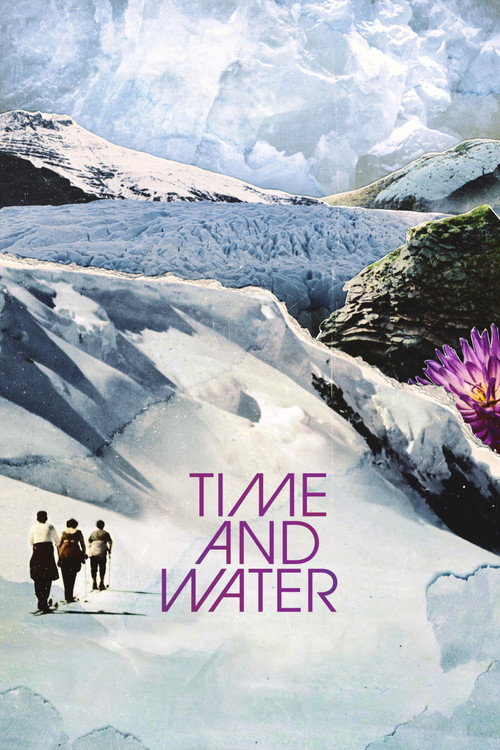
Time and Water
"How do you say goodbye to something you never thought you could lose?"
Revenue
Not Disclosed
Budget
Not Disclosed
Where to Watch
Stream in high quality



Global Revenue
Not Disclosed
Detailed Plot
Trailer
Top Cast

Production Stills & Gallery
User Reviews
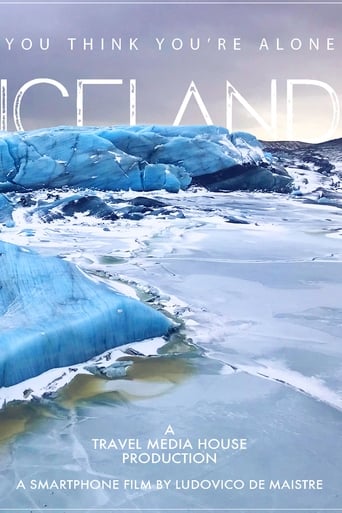
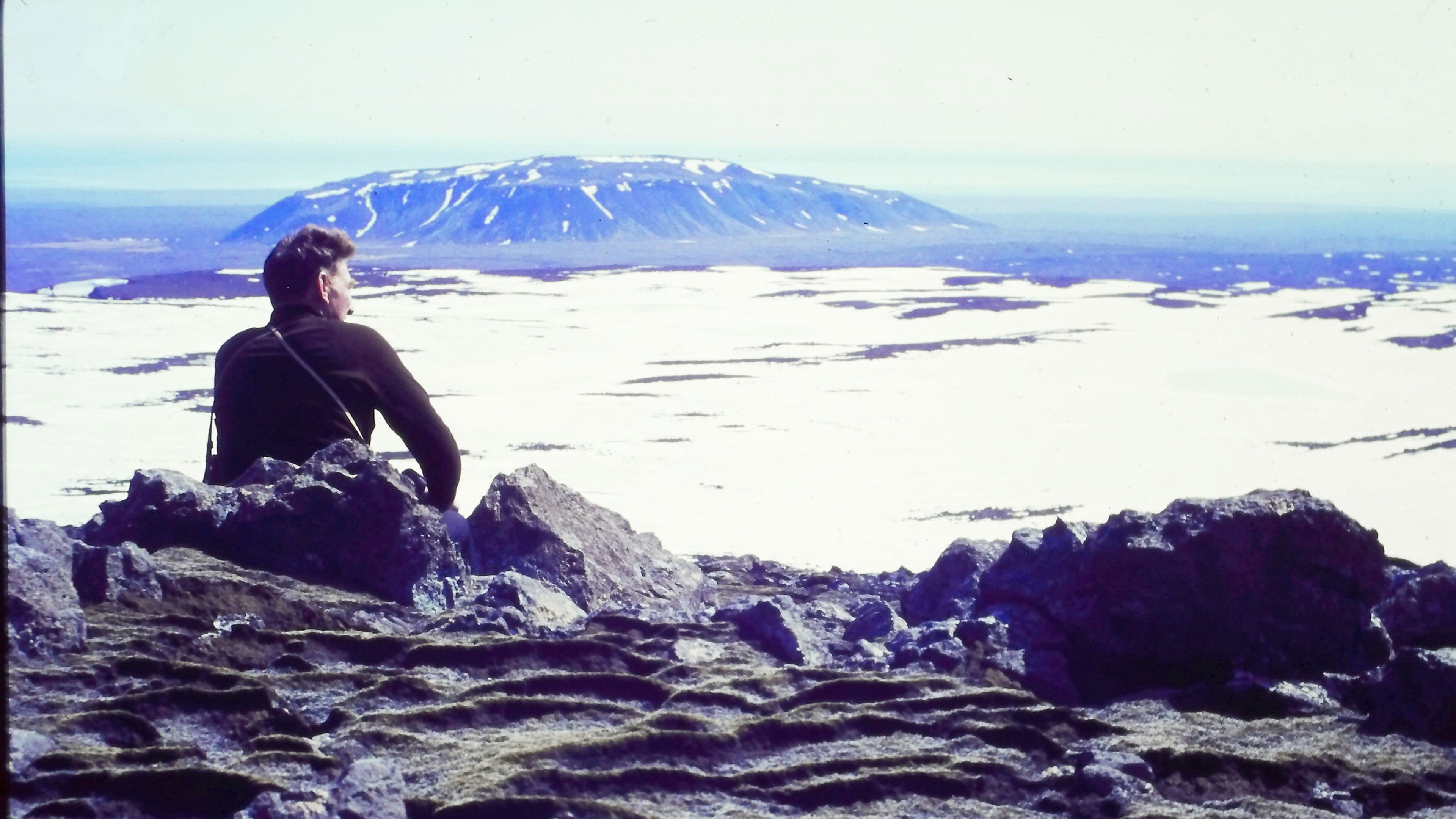
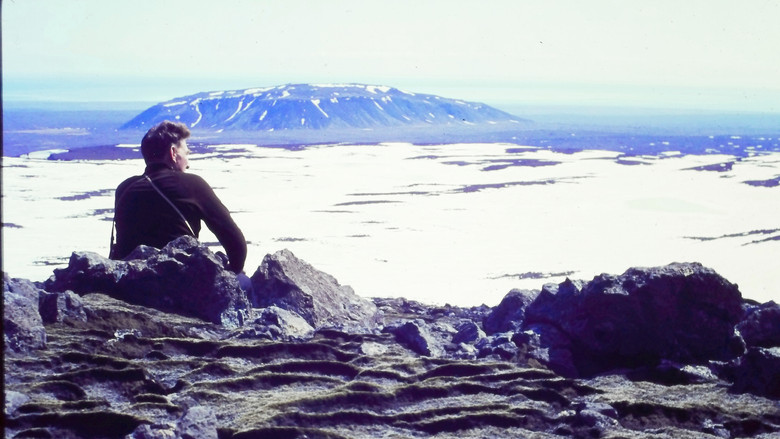
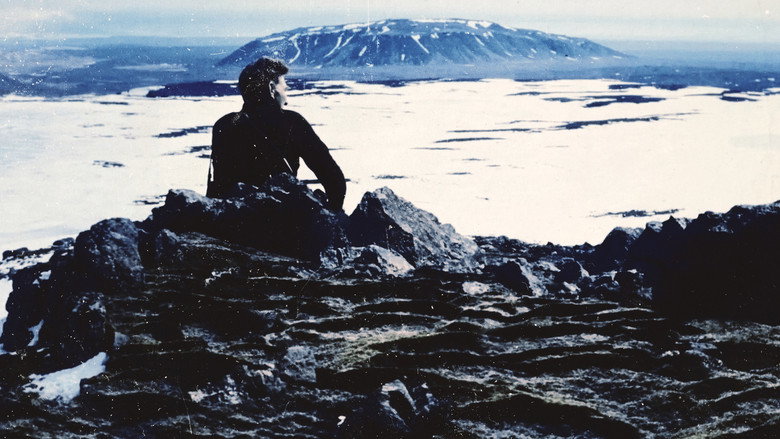
Using some family movies and some more up-to-date footage of the often moon-like scenery of modern day Iceland, this documentary proves really quite effective at illustrating the ongoing and profound effects of global warming. Rather than just bombarding us with statistics and scare-mongering facts, Icelandic writer Andri Snær Magnason introduces us to his now deceased grandparents and by using the chronology of their and his own lives, he is able to show us the glaciers they skied on in their youth - the 1950s, that have now become little more than heaps of rock and scree. Indeed, if you hadn't seen the films or photographs in their archive then you might never have known there had been a glacier there in the first place. It's this very visual contemporaneousness that proves the point he is trying to make in real-time terms. There is a line in his commentary that points out that events that took millennia to establish themselves are now being undone in the space of one single human lifetime. Indeed the prognosis for Iceland might well be that in the not too distant future, it might have to change it's name. It's a bit on the long side, but with some stunning volcanic photography mixed into this affecting family story, this is a most human take on the effects of climate change that allows us to watch this destruction as it actually happened and is happening.
Nature films generally do a great job of capturing the intrinsic beauty of our world and in explaining its function and attributes. They’re often gorgeous to look at and quite educational. However, these documentaries sometimes tend to be a little on the “clinical” side, keeping viewers at something of an emotionally arm’s-length distance. But, every so often, a release comes along that pleasantly surprises audiences, serving up nature’s bounty with an eloquent, poetic touch. Such is the case with the latest documentary from writer-director Sara Dosa, an offering that provides intriguing parallels between the world of nature and the world of man, delivered from a highly personal perspective and imparting a crucial cautionary tale for both realms. “Time and Water” presents a stunning and insightful cinematic essay about Iceland, specifically the special bond between its people and its landscape, particularly the island nation’s glaciers. Told primarily through the lens (literally) of writer and poet Andri Snær Magnason, the picture draws intriguing, thoughtful comparisons between Icelandic family histories (his own in this case) and the natural history of this magical land. This is accomplished by equating Magnason’s extensive and detailed personal multigenerational family history archives (writings, photos, and home movies, including numerous conversations with relatives) with the contents of the ice found in the country’s extensive network of glaciers. Both represent chronicles of both a natural and cultural/historical past, preserving what came from before and making it available for a current audience to examine, providing an understanding that stretches across time. Both make for important, irreplaceable time capsules and, in many regards, reflecting the symbiotic ties that exist between a people and their environment, one that has amassed over countless centuries. But the film also raises a significant question: will those archives last forever? Given the impact of global warming on the glaciers, they’re disappearing – along with their historical contents – at an alarmingly fast rate. Indeed, what took nature eons to compile could vanish in as little as a single lifetime. And, once they’re gone, they’re gone for good. As Magnason (who also serves as narrator) so poignantly observes, how can we tell those in the future about what exists now if no future will ultimately be in place? That’s something to think about, and this film raises thought-provoking questions like that throughout, backed by stunningly beautiful cinematography. These observations and images are accompanied by cinematic and other records of Magnason’s immediate family, as well as those of his parents and grandparents, documenting the connections among them in a way that the glacial ice comparably chronicles the island’s past. Admittedly, the home movie aspect of the finished product probably could have been pared back at times with its incorporation of some incidental footage that adds little to the overall narrative. Nevertheless, this combination of elements thus generally imparts a strong sense of continuity on both fronts and with one another, offering viewers a comprehensive look at how the two are, in many ways, one. And, if you take away one, it’s entirely possible that you might end up taking away the other, too, no matter how much time and water are available to help preserve them both.